

What age can kids start jiu jitsu? Most kids can start at age 4, in a class where the lessons look a lot more like games than fighting, and around age 8 they move into more technical work and more structured sparring. More than the birthday, what matters is whether your child can listen to a coach and stay with a class without you on the mat.
Key Takeaways
- Most kids can start jiu jitsu at age 4, in a game-based class with light, position-focused sparring.
- From about age 8, kids learn more technical work, and sparring stays controlled and age-appropriate.
- Readiness matters more than age: can your child follow a coach and stay with the group?
- The first class is free, no gi is needed, and comfortable athletic clothes are fine.
Parents ask us some version of this question all the time, usually with a little one tugging at their sleeve: “Is my kid old enough?” It’s a fair question. You’re picturing grown men grappling on TV, and you’re looking at a child who still needs help with their shoes. The good news is that jiu jitsu for kids looks nothing like that.
Our Head Professor knows this firsthand. Guybson Sá started training Brazilian Jiu-Jitsu (BJJ) at 4 years old in Fortaleza, Brazil, as the son of Grand Master Francisco Sá. Today he is a 4th-degree black belt, an IBJJF Pan-American Champion and an IBJJF World No-Gi Champion.
Here’s what we tell parents in Columbia when they ask where to start.
What age can kids start jiu jitsu?
Four is a good starting point for most kids. That’s where our youngest jiu jitsu class begins, and it’s built around how young kids actually learn.
Here’s how the two kids programs compare, so you can see where your child fits today:
| Little Kids BJJ | Youth BJJ | |
|---|---|---|
| Ages | 4 to 7 | 8 to 15 |
| How class runs | Games, rolling, falling safely, simple partner drills | Positions, escapes, and controlling a partner safely |
| Sparring | Light, focused on position, not submissions | Controlled and age-appropriate |
| Experience needed | None | None |
| First class | Comfortable clothes, gi not required | Athletic wear |
| If they keep training | A gi becomes part of the routine | Gi required; 2 to 3 classes a week recommended |
Ages 4 to 7: Learning Through Games
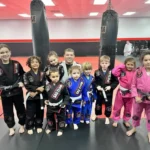
At this age, nobody is drilling submissions. A class is balance games, rolling, crawling, learning to fall safely, and simple partner drills that feel like play. The jiu jitsu is tucked inside the fun, and most kids leave tired and happy.
There is some light sparring focusing on learning, applying and defending position rather than submissions. Techniques come in slowly and gently, and the coaches keep the energy positive so kids want to come back.

Ages 8 to 15: Real Technique and Controlled Sparring
Once kids can follow a few steps in a row and stay focused a bit longer, the work gets more technical. Our Youth Brazilian Jiu-Jitsu program for ages 8 to 15 teaches positions, escapes, and how to control a partner without hurting them. Sparring is added too, kept controlled and age-appropriate.
No experience is needed to join, at any age from 8 to 15. Plenty of kids walk in having never worn a gi, and that’s completely fine.
What About Toddlers?
Parents of 2- and 3-year-olds ask us this a lot, so here’s the honest answer: our youngest class starts at 4. Most toddlers aren’t ready to follow a coach in a group yet, and that’s normal.
If your toddler loves to wrestle on the couch, keep it playful at home. Tumble, crawl, play “get up without using your hands.” Those are the same movements we build on later. When your child turns 4, bring them in for a trial and see how it goes.
Signs Your Child Is Ready
You don’t need a perfect kid. Use this quick checklist:
- They can follow a simple two-step instruction from an adult who isn’t you.
- They can stay with a group for a full class without needing you right there.
- They like to wrestle, climb, or roll around for fun.
- They can wait their turn, even if it’s not easy yet.
If your child checks a couple of boxes, a trial class will tell you the rest. And if the answer is “not yet,” that’s okay. A few months makes a big difference at this age.
Have a 4 to 7 year old who’s ready to try?
Our youngest students learn jiu jitsu through games and light, position-focused sparring, with coaches who keep every class fun and safe. See how our Little Kids Brazilian Jiu-Jitsu classes for ages 4 to 7 work
What your child’s first class looks like
The first class is mostly about getting comfortable. Your child will meet the coach, warm up with the group, and try a few movements and games, and nobody is thrown into anything.
For the very first trial, your child doesn’t need a gi. Comfortable athletic clothes are fine. If they decide to keep training, a gi becomes part of the routine, and you can always ask us what size or type to get.
A few tips that make day one easier:
- Arrive a few minutes early so your child can see the room before class starts.
- Skip the big meal right before class.
- Tell the coach if your child is shy, has an injury, or has anything else we should know.
- Let them try, even if the first ten minutes feel awkward. Most kids warm up fast once the games start.
Your first class at Spartan Academy is free. Pick a day that works for your family on our class schedule, and we’ll take it from there.
Is jiu jitsu safe for kids?
Yes, when the program is built for kids. Jiu jitsu doesn’t involve punches or kicks, and every technique has a “tap,” a simple signal that means stop.
Kids learn to hold positions, move their bodies, and get out of tough spots. They also learn early that when a partner taps, you let go right away. That one habit shapes the whole room.
How safety works depends on age. In our little kids class, sparring is light and focused on position, not submissions. In the youth program, sparring is controlled and age-appropriate, and our instructors focus on proper technique and injury prevention.
The bigger safety question is the room itself. A good kids class has structure and coaches who are paying attention, not an older student killing time. If you want a deeper look at how risk works in this sport, our article on whether jiu jitsu is dangerous and how to understand the risks walks through it.
What kids get out of jiu jitsu
Jiu jitsu gives kids a place to be physical and to get better at something hard, week by week. Here’s what parents tend to notice first.
Confidence They Earn on the Mat
Kids build confidence by doing hard things and seeing themselves improve. In jiu jitsu, that happens all the time. The escape that didn’t work last month starts working. A partner who used to pin them every time now has to work for it.
Focus and Listening
Every class asks kids to pay attention before they move. For a 5-year-old, that might be copying a movement right after the coach shows it. For a 12-year-old, it’s remembering a sequence of steps while a partner is pushing back.
A Calm Answer to Bullying
Jiu jitsu teaches control, not striking. Kids learn to stay calm when someone grabs them and to get to a safe position without hurting anyone.
Just as important, they learn to use their voice first. A kid who knows they can handle themselves usually doesn’t feel the need to prove it.
Friends, Respect, and Good Losing
Kids train with the same partners week after week, so friendships grow naturally. They shake hands before they roll and help each other up after. They also lose in practice, a lot, and find out that losing a round just means you get to try again.
How to choose a kids jiu jitsu program
Visit before you sign anything, and watch a real class. Here are the decision criteria we’d use as parents, at our gym or anywhere else:
- Age groups. Little kids and older kids should train in separate classes. A 5-year-old and a 13-year-old need very different things.
- Who’s teaching. Ask about the head instructor’s background and who actually runs the kids classes. You can read about our Spartan Academy coaching team, led by Head Professor Guybson Sá.
- How sparring works. Ask when it starts, how partners are paired, and who supervises. If the answer is vague, keep looking.
- The mood in the room. Kids should be moving, laughing at the right moments, and listening when the coach talks. Shouting and chaos are red flags.
- A path forward. It helps when a gym can grow with your child. At Spartan, kids can move from Little Kids to Youth BJJ, and those who love it and have built a solid foundation can join the Kids BJJ Competition Class for ages 7 to 15. Competition is always optional.
Some kids also want to try striking. For them, we offer Youth Kickboxing for ages 8 to 15, where they learn punches, kicks, and defense through drills and controlled practice. If you’re weighing the two, our guide to the benefits of kickboxing for kids is a good next read.
Is jiu jitsu right for your child?
If your child has energy to burn or just hasn’t found “their thing” yet, jiu jitsu is worth a try. You don’t have to know anything about martial arts, and neither does your child.
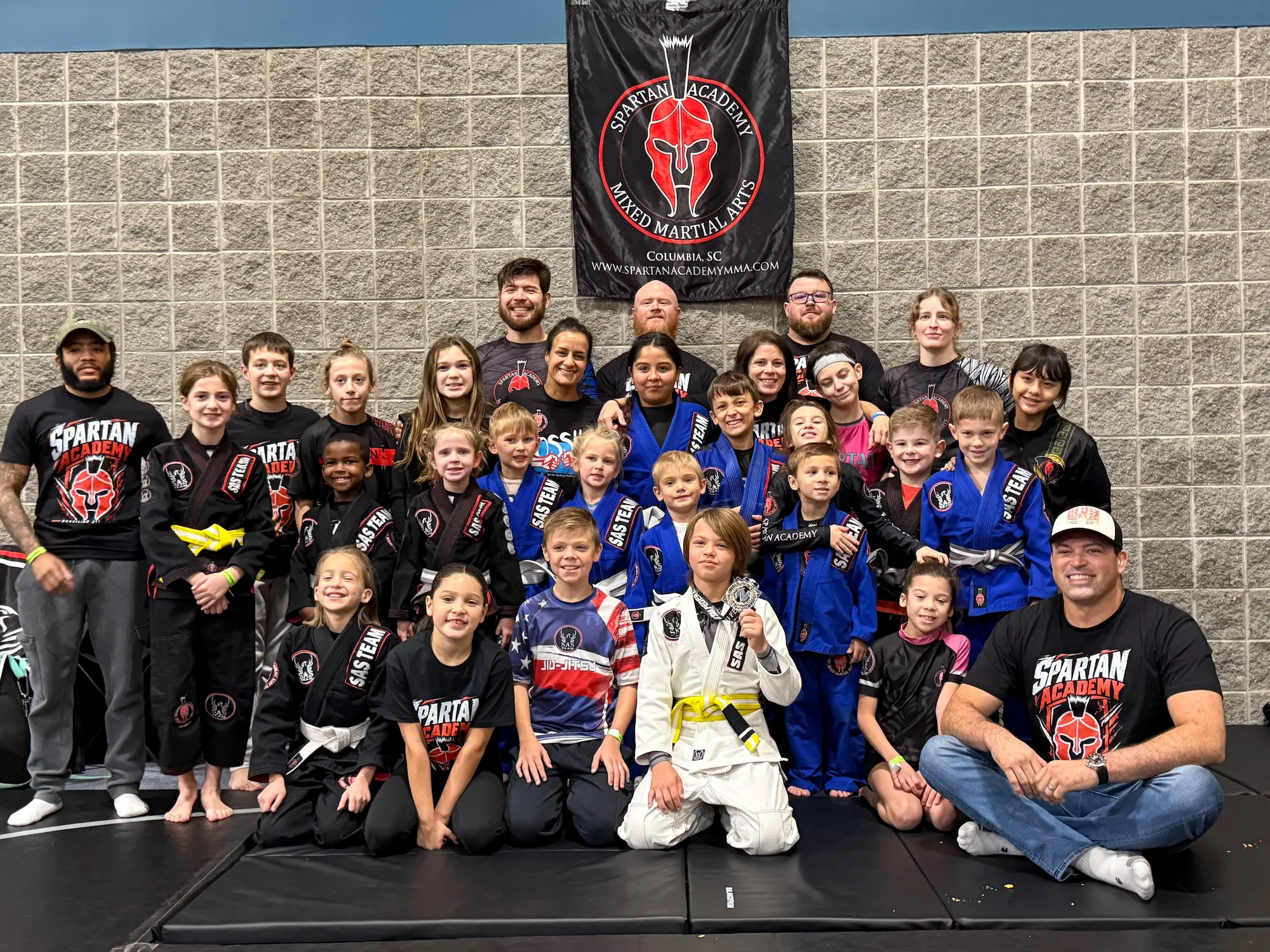
That’s what the coaches are for. At Spartan Academy in Columbia, kids train under Head Professor Guybson Sá, a 4th-degree black belt from the Sá family lineage of SAS Team BJJ. His titles include the IBJJF Pan-American Championship and the ADCC Nationals. Our academy was named a Best of South Carolina winner by Guide to SC in 2024 and 2026.
Questions Parents Ask About Kids Jiu-Jitsu
Here are short answers to the questions parents ask us most once their child has tried a class.
Will jiu jitsu make my child more aggressive?
It usually works the other way. Kids learn that they’re in control of their bodies, that a tap means stop, and that partners take care of each other. The rules on the mat are clear, and kids who know the rules tend to feel calmer, not rougher.
What if my child is shy or gets upset at the first class?
That’s common, and it’s okay. Let the coach know before class, stay where your child can see you, and let them join when they’re ready. Some kids watch for a few minutes before they step in, and that still counts as a good first day.
Do girls train jiu jitsu too?
Absolutely. Our kids classes are for boys and girls, and they train side by side. Jiu jitsu rewards technique and leverage over size, which is one reason it works so well for kids of every build.
How many times a week should my child train?
For the youth program, we recommend two to three classes a week so the techniques stick from one class to the next. For the little ones, showing up regularly matters more than how many classes they do. Check the schedule and pick what fits your family.
Is it too late to start jiu jitsu at 12 or 14?
Not at all. No experience is needed to join our youth program, at any age from 8 to 15. Older kids can usually focus for longer, which helps when they’re learning something new.
The easiest way to know if jiu jitsu fits your child is to watch them try it. Your child’s first class is free, no gi or experience needed, so come see for yourself. Book your child’s free trial class today and we’ll help you pick the right class for their age.